

EU ministers met in Dublin to discuss stronger consumer protection in the digital sphere
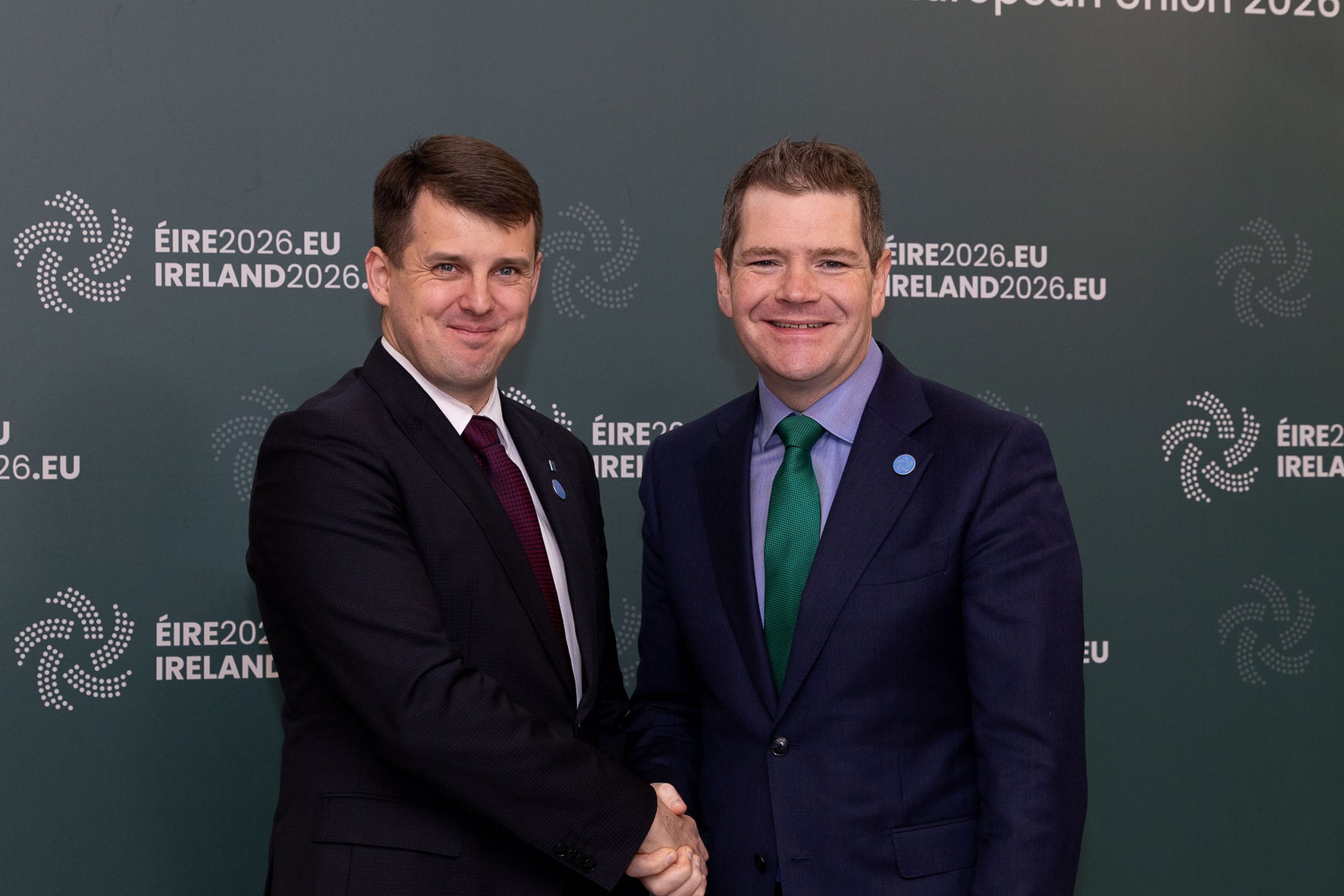
Martynas Dobrovolskis, Deputy Minister for Justice, attended an informal meeting of European Union (EU) ministers responsible for consumer affairs in Dublin, where participants discussed the challenges posed by digital markets, the strengthening of consumer rights protection and the more effective implementation of EU consumer legislation.
One of the key issues on the agenda was the Digital Fairness Act proposed by the European Commission, which aims to tackle problems relating to manipulative practices online, unfair personalisation in advertising and pricing, the design of digital services that encourages addiction, measures that encourage excessive consumer spending, and other challenges in digital commerce.
According to the Deputy Minister for Justice, the new regulations must ensure a high level of consumer protection, whilst at the same time preserving a competitive and innovation-friendly single market within the EU. It is important that the new rules are consistent with existing EU legislation, do not create unnecessary regulatory duplication, and are clear to both businesses and supervisory authorities.
Particular attention must be paid to protecting minors from manipulative and addictive digital service design, as well as from practices that encourage excessive consumption. The Digital Fairness Act and the proposed EU regulation on the protection of children online should form a coherent and effective system for the protection of minors.
“Consumer protection and a favourable environment for business and innovation are not mutually exclusive objectives. We must strive for clear, proportionate and practicable rules that protect consumers from harmful practices, ensure legal certainty for businesses and avoid unnecessary regulatory burdens,” said M. Dobrovolskis, presenting Lithuania’s position.
The ministers’ meeting also discussed the review of the EU Regulation on Consumer Protection Cooperation (CPC). The aim is to strengthen cooperation between national authorities, speed up investigations into cross-border infringements, set clearer procedural deadlines and ensure more effective enforcement of sanctions.
In Lithuania’s view, with the rapid growth of e-commerce and the expansion of cross-border trade, action by national authorities alone is no longer sufficient to address all infringements of consumer rights. It is essential to strengthen the EU’s common operational mechanisms and to ensure that businesses established outside the EU but providing services to European consumers also comply with the Union’s consumer protection rules.
More effective regulation is important not only for protecting consumer rights, but also for ensuring fair competition. When businesses that fail to comply with the rules escape accountability, compliant companies are placed at a disadvantage, and consumers lose confidence in cross-border trade. Lithuania therefore supports the aim of strengthening cooperation between EU institutions and national supervisory authorities.
The meeting also provided an opportunity to exchange views on the EU’s consumer policy priorities set out for the period up to 2030. When discussing future directions, emphasis was placed on the need to take into account the rapid development of digital markets, the growing role of artificial intelligence in consumers’ daily lives, and new risks to the protection of vulnerable consumers.
Last updated: 20-11-2026