

EU Member States signed a communication on model provisions for EU criminal law
In Brussels, all Member States of the European Union addressed Magnus Brunner, European Commissioner for Home Affairs and Migration, and Michael McGrath, European Commissioner responsible for democracy, justice, consumer protection and the fight against disinformation, expressing support for new model provisions of EU criminal law. This document aims to create clearer and more consistent regulation of substantive criminal law that would be harmonised across the EU.
The new model provisions set model standards of different stages of criminal offences, types of complicity, penalties for natural persons and legal entities. They outline the criteria of aggravating and mitigating circumstances, establish common rules on jurisdiction and criminal liability of legal entities, principles for calculating limitation periods, and establish standards for collecting statistical data.
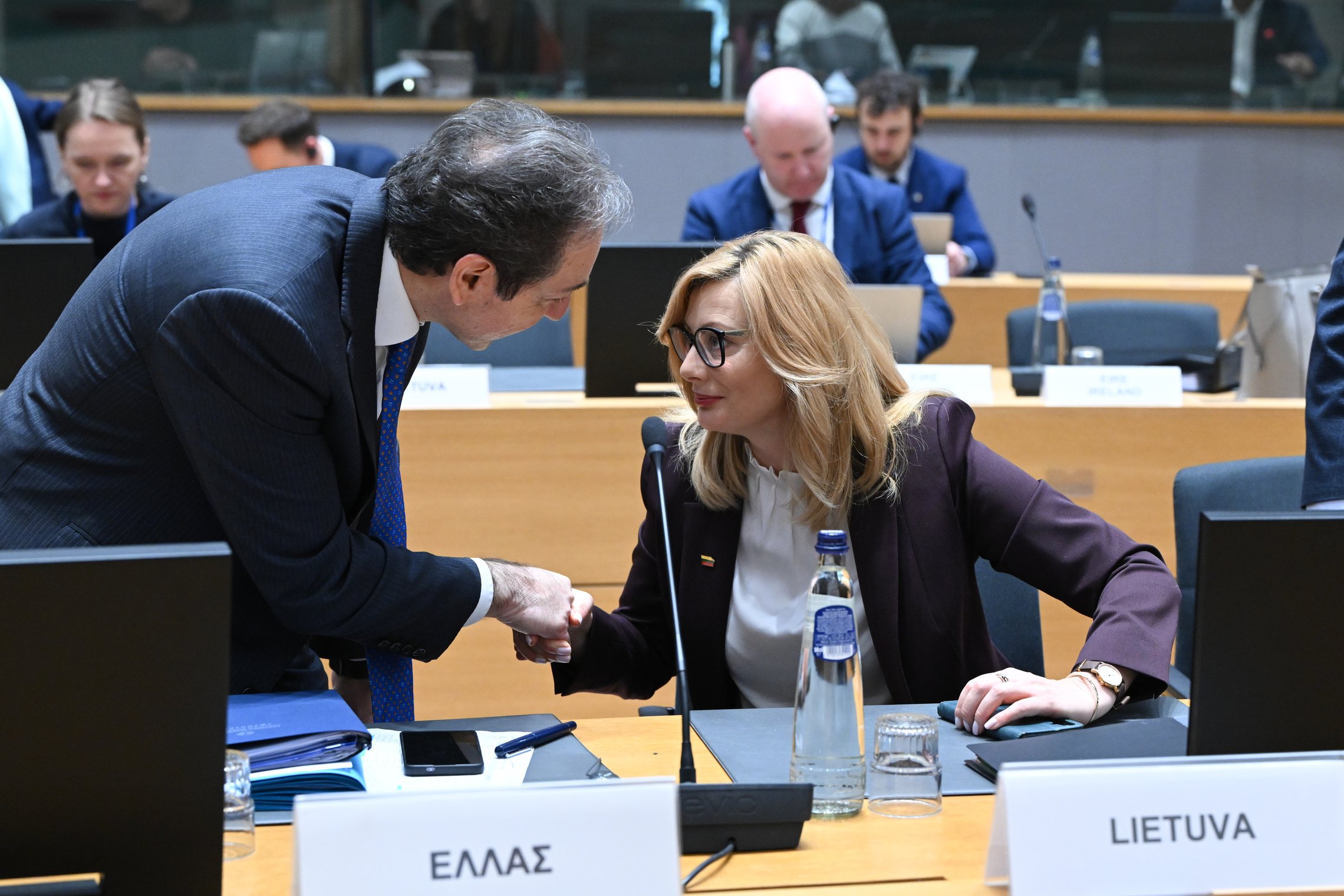
“Model provisions are an important instrument for ensuring the clarity and consistency of EU law. Their application will make it easier for Member States to implement new criminal law legislation,” noted Minister of Justice Rita Tamašunienė.
The communication also stressed that the model provisions should not be binding for lawmakers. Instead, they are meant to serve as a flexible set of guidelines for institutions to choose the wordings that are most appropriate for the legislation being drafted. Such approach would ensure a clearer overall structure, assist the Council in drafting future proposals for EU legislation on substantive criminal law, and would contribute to their mutual compatibility.
The main goal of the model provisions is to establish wordings that would be agreed on across the EU and would ensure the consistency between legislation, the clarity of legal terms, and the effectiveness in the application of law. These provisions should become a guideline for Member States in drafting or implementing criminal law regulations required by EU law, thereby increasing the overall effectiveness of the legal system and legal certainty.
In Brussels, all Member States of the European Union addressed Magnus Brunner, European Commissioner for Home Affairs and Migration, and Michael McGrath, European Commissioner responsible for democracy, justice, consumer protection and the fight against disinformation, expressing support for new model provisions of EU criminal law. This document aims to create clearer and more consistent regulation of substantive criminal law that would be harmonised across the EU.
The new model provisions set model standards of different stages of criminal offences, types of complicity, penalties for natural persons and legal entities. They outline the criteria of aggravating and mitigating circumstances, establish common rules on jurisdiction and criminal liability of legal entities, principles for calculating limitation periods, and establish standards for collecting statistical data.
“Model provisions are an important instrument for ensuring the clarity and consistency of EU law. Their application will make it easier for Member States to implement new criminal law legislation,” noted Minister of Justice Rita Tamašunienė.
The communication also stressed that the model provisions should not be binding for lawmakers. Instead, they are meant to serve as a flexible set of guidelines for institutions to choose the wordings that are most appropriate for the legislation being drafted. Such approach would ensure a clearer overall structure, assist the Council in drafting future proposals for EU legislation on substantive criminal law, and would contribute to their mutual compatibility.
The main goal of the model provisions is to establish wordings that would be agreed on across the EU and would ensure the consistency between legislation, the clarity of legal terms, and the effectiveness in the application of law. These provisions should become a guideline for Member States in drafting or implementing criminal law regulations required by EU law, thereby increasing the overall effectiveness of the legal system and legal certainty.
Last updated: 12-12-2025
Related news:
R. Tamašunienė: Lithuanian–Irish cooperation is important in preparing for the EU Presidency