

Lithuania is proposing at the EU level to strengthen the protection of children on social media and supports a minimum age of 16
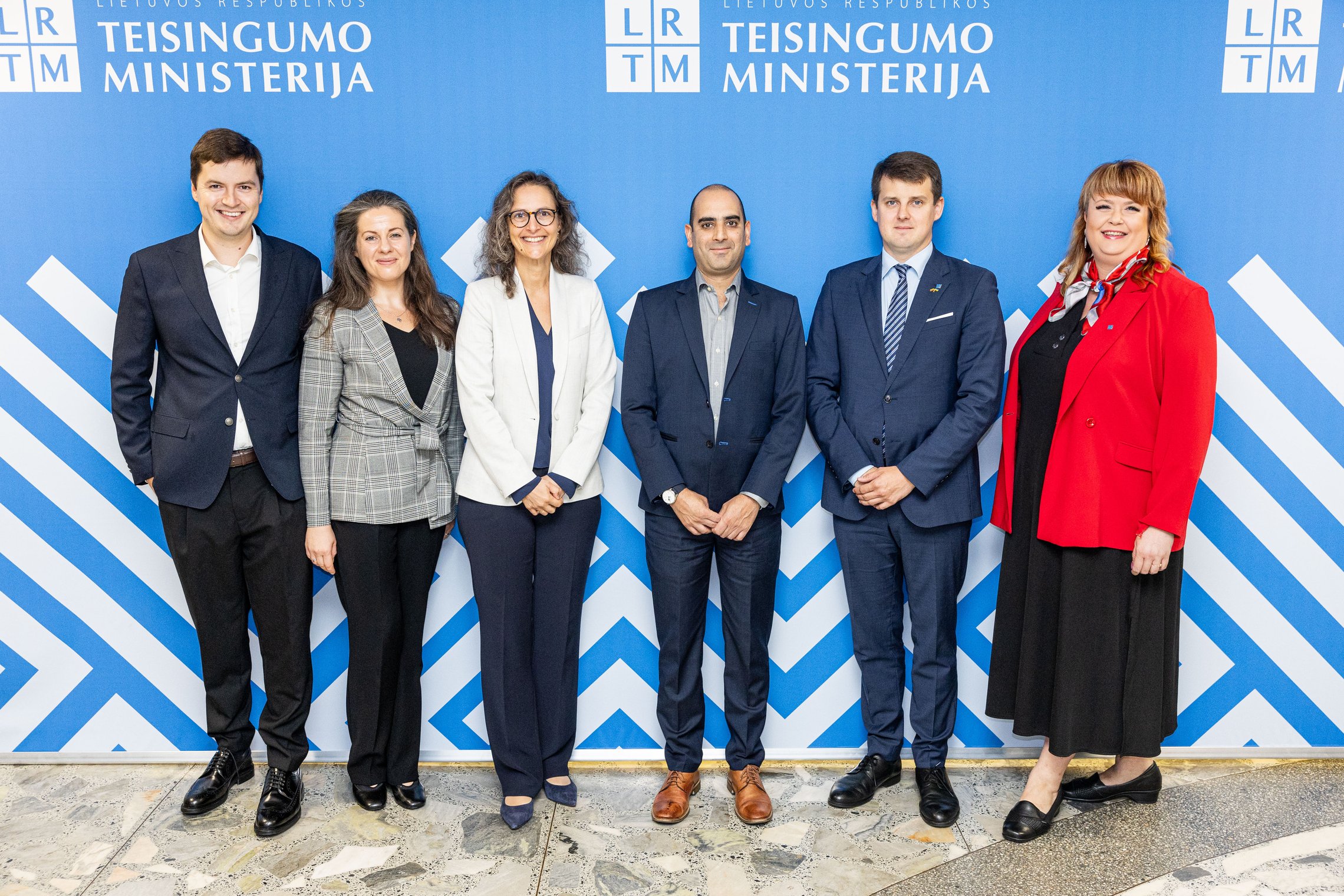
Deputy Ministers of Justice Martynas Dobrovolskis and Barbara Aliaševičienė met with Keerat Sharma, Vice President of Google and General Manager of Ads Privacy and Safety. The meeting addressed issues related to the protection of children in the digital space, measures being considered at the European Union (EU) level, and the responsibility of technology companies for a safer digital environment.
At the EU level, Lithuania seeks to strengthen the protection of children in the digital space and supports a minimum age requirement of 16 for using social media. At the same time, it proposes the creation of a harmonized age verification system across the EU.
One of the main topics of the meeting was the Digital Fairness Act (DFA) being drafted by the European Commission. Lithuania’s position is that digital platforms and technology companies must assume greater responsibility for children’s safety online.
“Today, the protection of children can no longer be understood solely as protection in the physical environment. A large portion of the risks has shifted to the digital space, so the legal system must adapt to this reality,” says Deputy Minister of Justice B. Aliaševičienė.
According to the deputy minister, minors are a particularly vulnerable group of users. Their behavior and choices in the digital space can be influenced by algorithms, manipulative design practices, and commercial interests. Therefore, it is essential to ensure stronger protection for children against illegal and age-inappropriate content, as well as other risks posed by social media.
It is proposed to strengthen the obligations of platforms – to establish effective age verification mechanisms, to require risk assessments to be carried out, and to implement measures to reduce harmful content and other threats. At the same time, the importance of digital literacy, parental empowerment and effective supervision is emphasised.
Martynas Dobrovolskis, Deputy Minister of Justice, emphasised that these issues should be addressed at EU-wide level. As social media platforms operate across national borders, national measures alone are insufficient to ensure a common and effective standard of child protection.
At present, Lithuanian legislation does not explicitly specify the age at which minors are prohibited from using social media. Nevertheless, Lithuania supports the establishment of a minimum age requirement at EU level – preferably 16 years – alongside the creation of a harmonised age verification system across the European Union.
The issue of restricting children’s access to social media has recently been the subject of increasingly active debate in various EU Member States. Political discussions on this matter are taking place in Denmark, Belgium, Greece, Austria, Germany, France and other countries.
At EU level, various measures are being considered – ranging from setting a minimum age and mandatory age verification to restricting designs that encourage addiction, risk-based assessments of platform access based on a child’s age, and shifting greater responsibility for children’s safety onto the platforms themselves.
The European Commission has also developed an age verification app, which should enable users to prove their age without disclosing more personal data than is necessary.
The meeting also discussed the Digital Omnibus Package – a proposal from the European Commission aimed at simplifying and clarifying the application of existing digital rules.
In November 2025, the European Commission presented a proposal for amendments to the General Data Protection Regulation (GDPR). The proposal is currently being discussed in the Antici Working Party of the Council of the EU. It aims to reduce the administrative burden, increase legal clarity and strengthen Europe’s competitiveness, whilst maintaining a high level of protection for fundamental rights.
Lithuania welcomes efforts to reduce the administrative burden on businesses and to promote the EU’s competitiveness. With Lithuania’s Presidency of the Council of the EU approaching, Lithuania intends to actively monitor the ongoing negotiations and, where necessary, be prepared to continue working with the European Parliament.