

Minister of Justice Rita Tamašunienė met with OSCE High Commissioner on National Minorities Christophe Kamp
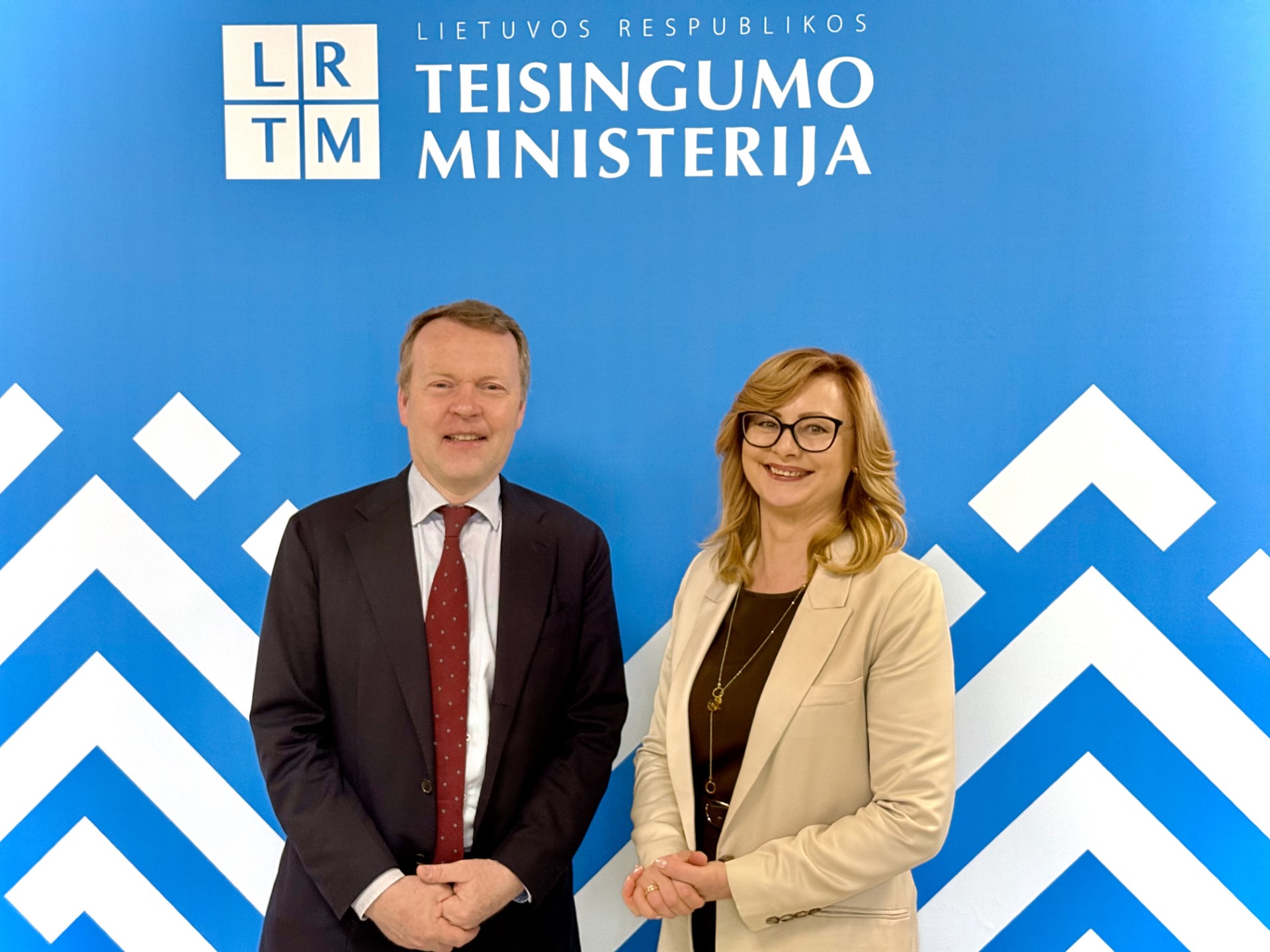
Minister of Justice Rita Tamašunienė met with Christophe Kamp, High Commissioner on National Minorities of the Organization for Security and Co-operation in Europe (OSCE). During the meeting, they discussed the situation of national minorities in Lithuania, progress in legal regulation, and further steps in strengthening the protection of national minority rights.
The Minister emphasised that better protection of national minority rights is one of the priorities of this Government, therefore, a working group has been set up from representatives of various institutions, national minority organisations and the academic community, with the aim of improving the provisions of the Law on National Minorities.
Issues regarding the spelling of personal names were also discussed during the meeting. Starting from 1 May 2022, the names and surnames of citizens of the Republic of Lithuania who are not of Lithuanian ethnicity and the names and surnames of their children may be written in documents using the Latin alphabet, but without diacritical marks. Over the past four years, the Ministry of Justice has authorised changes in names and surnames in transcribing them using the Latin alphabet for 444 Lithuanian citizens of non-Lithuanian ethnicity and their children.
The Minister of Justice stressed that respect for national identity and human rights is an integral part of a modern and open state.
“Lithuania is a state where every person should feel respected and seen regardless of their ethnic origin. The rights of national minorities are not merely a formal implementation of international obligations, but also an expression of our mature democracy. A person’s name and surname is an essential part of their identity, so the ability to write them in their original form is an important sign of respect for human dignity, family history and cultural identity,” said Minister of Justice Rita Tamašunienė.
In addition, the Ministry of Justice has drafted and submitted for public consultation a draft law on the spelling of personal names in documents using Latin-based characters with diacritical marks.
At the end of 2024, the Seimas of the Republic of Lithuania adopted the Law on National Minorities, which entered into force on 1 January 2025. This Law partially implements the Framework Convention for the Protection of National Minorities and contributes to the implementation of the 2025 recommendation of the Committee of Ministers of the Council of Europe.
The new Law establishes an inclusive definition of a national minority and the criteria for Lithuanian citizenship allow for a clear distinction between national minority policy and migration policy. It also sets out other criteria for national minorities, such as long-standing, strong and continuous ties with the Republic of Lithuania, defines the fundamental principles of national minority policy, as well as the conditions for the exercise of the rights by persons belonging to national minorities, and the obligations of state authorities.
The Law also regulates the representation of national minorities – defines the status of the institution representing the interests of national minorities, the Council of National Minorities.
The Minister noted that the Ministry of Justice is consistently striving to improve the legal regulation so that Lithuanian citizens belonging to national minorities can fully exercise their rights, preserve their language, culture and traditions, while at the same time strengthening social cohesion and mutual trust, as the situation of national minorities is an important indicator of the level of democracy.
OSCE High Commissioner on National Minorities Christophe Kamp commended the work of the working group on the Law on National Minorities and stressed that the effective implementation of this Law will be highly important for the strengthening of cohesion in society.
According to Ms Tamašunienė, it is particularly important for national minorities to preserve their identity, uphold traditional values and maintain their cultural identity, therefore, in implementing the right to education, special attention must be paid to the issue of education of national minorities. It is also important to ensure the availability of public services in the languages of national minorities in multilingual municipalities.
Last updated: 22-05-2026
Related news:
R. Tamašunienė: Lithuanian–Irish cooperation is important in preparing for the EU Presidency