

Minister of Justice Tamašunienė: application of the Convention must be dynamic and responsive to today's threats
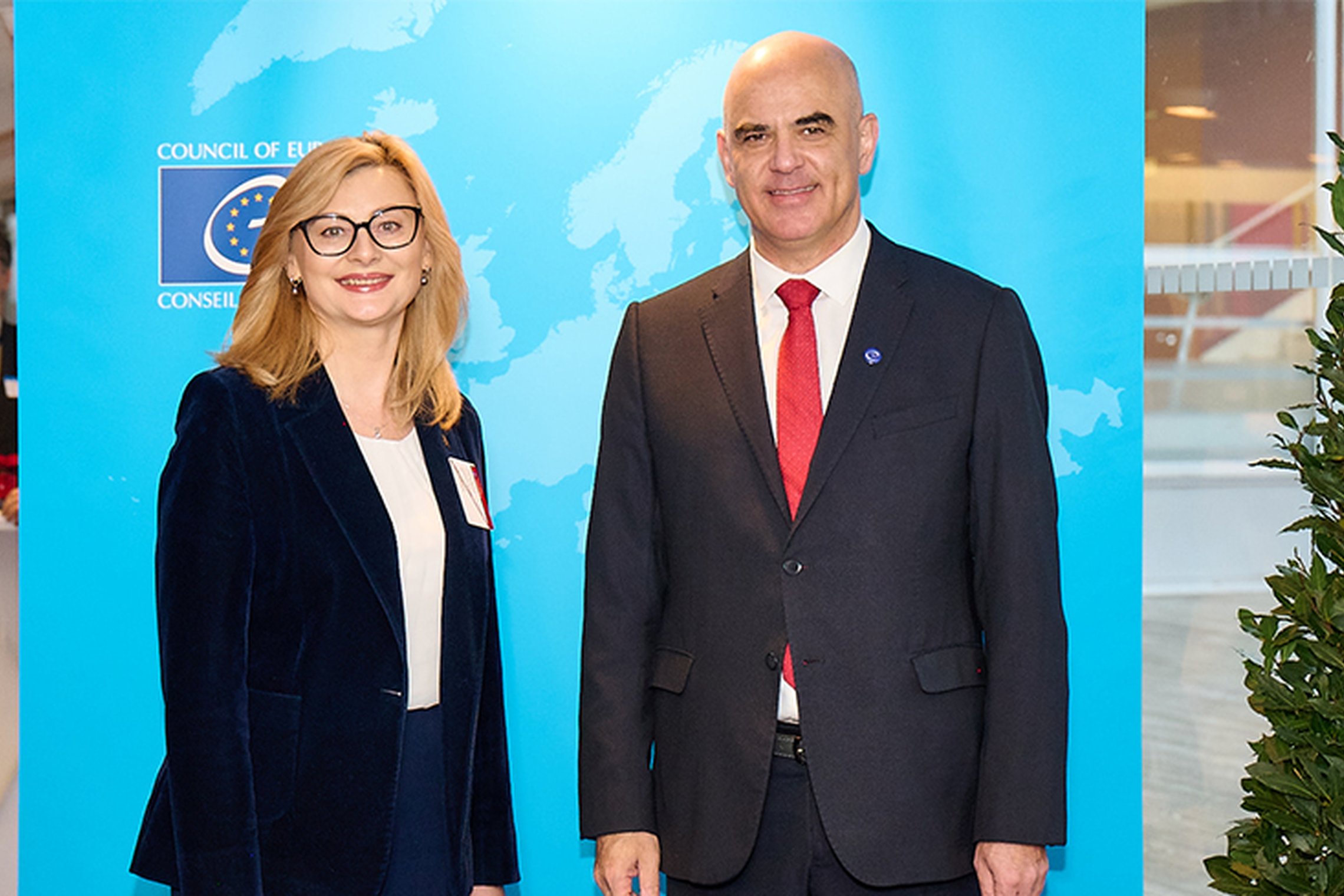
On Wednesday, Minister of Justice Rita Tamašunienė participated in an informal conference of Ministers of Justice of the Council of Europe in Strasbourg, where Lithuania, together with 26 other member states, presented a joint political declaration on the necessity to strengthen Europe's resilience to present-day threats in the context of migration, including instrumentalisation.
The Minister emphasised that this discussion is taking place at the time when Europe is facing irregular migration flows and hybrid attacks, when authoritarian regimes take advantage of the commitments made by democratic states to human rights in order to influence our democracies, values, and unity. According to the Minister, this situation requires the ability to respond to new challenges of security without losing confidence in the system of the European Convention on Human Rights.
“Lithuania consistently supports the Convention as a living instrument – one that must evolve together with the changing geopolitical environment, while preserving the independence of the European Court of Human Rights and its ability to respond to emerging challenges,” emphasised Ms Tamašunienė.
According to the Minister, since the Convention is a constitutional document of European public order, its application must remain dynamic, allowing states not only to protect individual rights, but also to defend democratic institutions and national security when they are targeted by purposeful external attacks.
As far as the instrumentalisation of migration is concerned, the Minister stressed the necessity to interpret the Convention clearly and firmly, taking into account three essential aspects: the malicious use of people as a tool of political pressure, real and direct threats to public order, and the need for states to apply proportionate and legitimate measures. She stressed that the principles of human rights and security reinforce each other and that the Convention must remain an instrument that helps the states preserve democracy, the rule of law, and the security of their citizens.
The conference adopted the conclusions that provide for the determination of participating states to continue political dialogue in the directions set out by the Council of Europe.
In addition, it is planned to approve the action plan of the Council of Europe at the meeting of the Committee of Ministers on Wednesday evening.
On 22 May 2025, the leaders of nine states – Denmark, Italy, Austria, Belgium, the Czech Republic, Estonia, Latvia, Lithuania, and Poland – signed a joint political statement aimed at drawing attention to the challenges arising in the context of migration and expressing the need to ensure a fair balance concerned the interpretation of the Convention developed by the European Court of Human Rights.
Today (December 10), 18 more member states (Ireland, Albania, Bulgaria, Iceland, Montenegro, United Kingdom, Croatia, Malta, Netherlands, Norway, Romania, San Marino, Serbia, Slovakia, Finland, Sweden, Ukraine, Hungary) joined this political statement.
Last updated: 12-12-2025
Related news:
R. Tamašunienė: Lithuanian–Irish cooperation is important in preparing for the EU Presidency